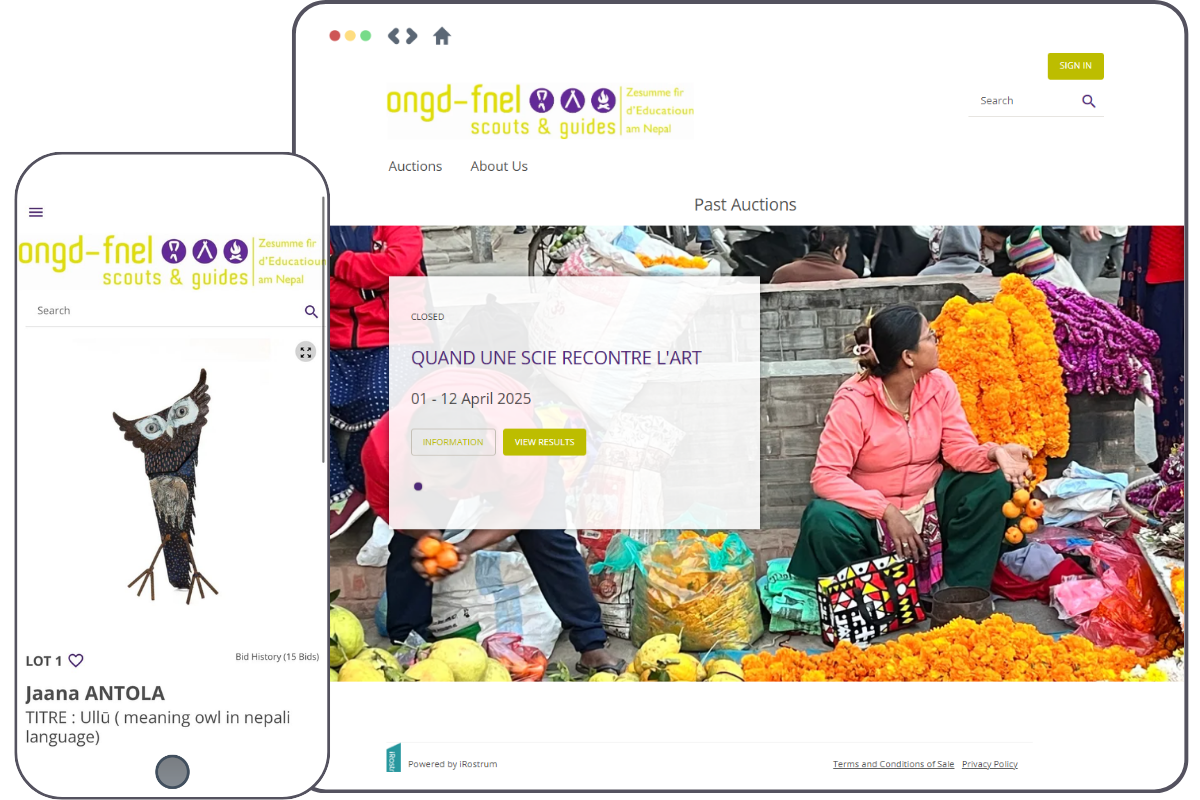
What charity auction software usually prioritises
Current fundraising platforms such as GiveSmart, OneCause, Handbid, and Auctria typically lead with mobile bidding, ticketing, text messaging, guest management, giving, and event administration. These are sensible priorities when the auction is part of a wider fundraising experience.
- Supporter registration and checkout
- Text and mobile engagement
- Event-night participation
- Donor-facing communications
- Table, guest, and sponsorship logistics
What commercial auction software usually prioritises
Commercial auction software is usually organised around catalogue quality, bidder confidence, sale mechanics, invoicing, reporting, operational control, and ongoing auction activity. The platform often needs to support valuable assets, larger catalogues, specialist workflows, and repeat business use rather than a single campaign event.
Where iRostrum becomes especially interesting
iRostrum sits in a stronger middle ground than many buyers initially expect. It can support charity and not-for-profit auctions, but it does so with the logic of a professional auction platform rather than just an event app. That is a meaningful difference.
The platform already speaks directly to silent auctions, timed online auctions, live events, and recurring annual fundraising campaigns. At the same time, it keeps the stronger commercial foundations that matter when a charity wants clearer brand control, post-auction invoicing, bidder qualification, and a more durable route to market.
Brand, workflow, and bidder experience matter in charity too
Not every charity wants to force its auction into the workflow of a donor-event platform. Some want the experience aligned around their own brand, their own audience, and the level of operational control they require.
iRostrum can be a better fit when the charity wants a platform tailored around its branding, domain, language, currency, timezone, browsing journey, registration requirements, and bidder communications. That makes the auction feel like the charity's own experience, not an outsourced event layer.
For commercial operators, the value is even clearer
Commercial operators benefit from the same adaptability. Single Seller, Multi-Seller, and Marketplace operating models allow iRostrum to support very different organisations without flattening them into one fixed workflow. This is particularly relevant where consignments, settlement processes, specialist presentation, or bidder verification requirements are important.
When iRostrum is likely to be stronger than a fundraising suite
- The organisation wants the auction under its own brand and domain rather than primarily inside an event-software environment.
- The team needs a more professional sale process with clearer invoicing, settlement, or qualification workflows.
- The organisation expects its auction activity to recur and evolve rather than remain a one-off gala add-on.
- The team wants the option to support multiple formats, from silent and timed auctions to live or hybrid events.
When a fundraising suite may still be the better fit
A fundraising event suite may still be the better fit where ticketing, donor CRM, sponsor management, and event logistics are the real centre of gravity. That does not weaken iRostrum's message. It strengthens it, because it shows the business understands the category instead of pretending every charity needs the same software.
Conclusion
If the organisation wants software that behaves like serious auction infrastructure while still working well for charity and not-for-profit use cases, iRostrum has a stronger position than many comparison lists suggest. It gives charities and commercial operators alike the chance to shape the platform around their brand, workflow, and bidders rather than accepting a one-size-fits-all process.